


As dog owners, we take our furry companions for walks every day, but is it really enough? The truth is, every dog has different exercise needs. Breed, age, health condition, and energy level all play a role in determining how much daily activity your dog truly requires.
Too little exercise can lead to obesity, boredom, and behavioural problems — while too much, especially in young or senior dogs, can cause injury or exhaustion.
Understanding your dog’s individual needs is one of the most important things you can do for their long-term health and happiness.
1. Exercise Needs by Breed
Not all breeds are created equal when it comes to energy levels. Dogs generally fall into three categories:
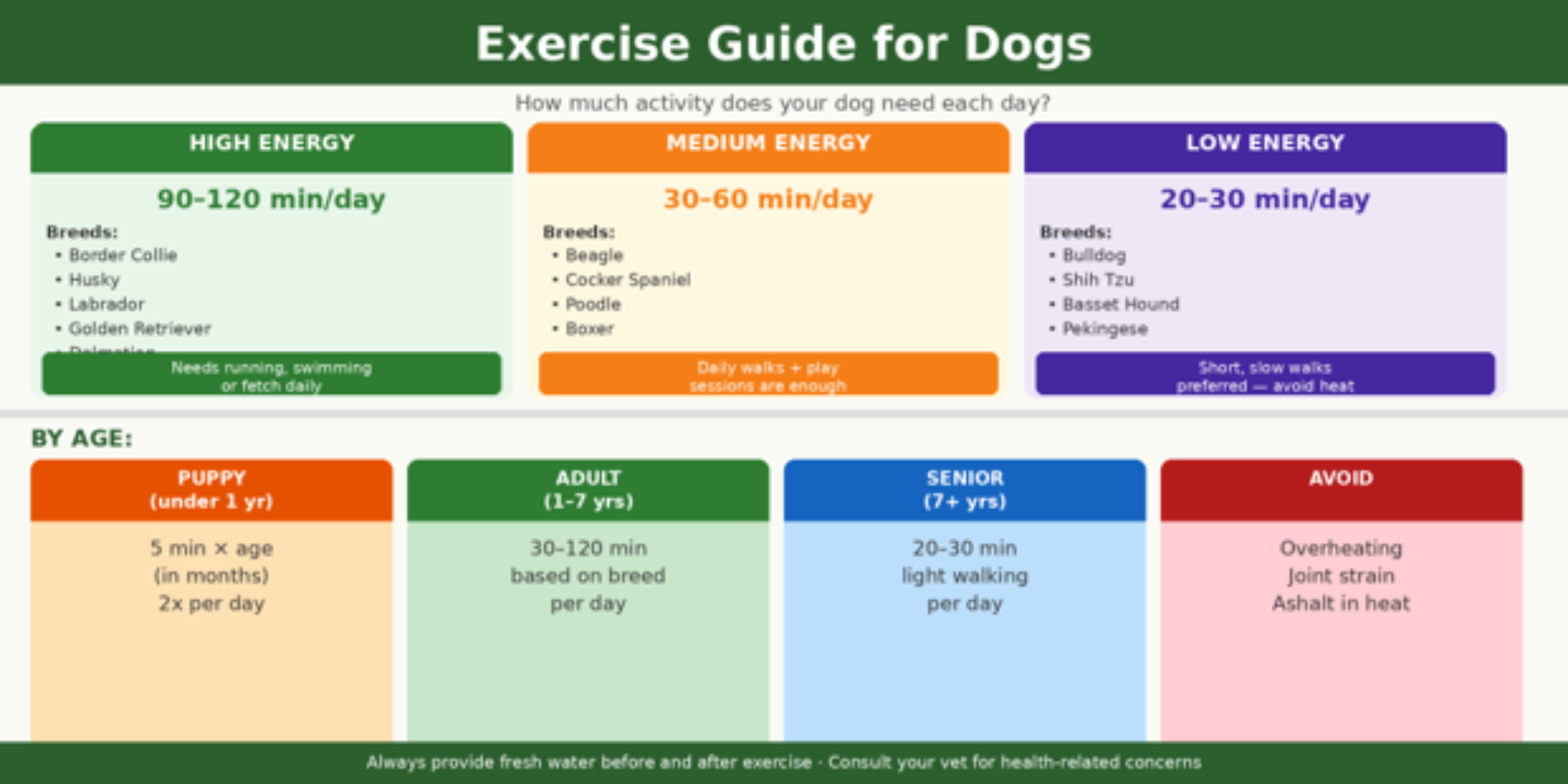
High-energy breeds (90–120 minutes per day)
- Border Collie, Husky, Labrador, Golden Retriever, Dalmatian
- These dogs love running, swimming, and intense play sessions
- Without adequate exercise, they may become destructive or anxious
Medium-energy breeds (30–60 minutes per day)
- Beagle, Cocker Spaniel, Poodle, Boxer
- Daily walks combined with play time are usually sufficient
- These breeds enjoy social activities and interactive games
Low-energy breeds (20–30 minutes per day)
- Bulldog, Shih Tzu, Basset Hound, Pekingese
- Short, slow-paced walks are ideal for these dogs
- Overexertion can lead to breathing difficulties — especially in flat-faced breeds
2. Exercise Needs by Age
Your dog’s age directly affects the amount and intensity of exercise they need.
Puppies (under 1 year):
- A general guideline: 5 minutes of exercise per month of age, twice a day
- For example, a 4-month-old puppy needs 2 × 20 minutes of activity daily
- Avoid long runs on hard surfaces — joints are still developing
Adult dogs (1–7 years):
- Between 30 minutes and 2 hours daily, depending on breed
- Activities like running, swimming, and fetch work well
- Regular exercise helps maintain a healthy weight and prevents disease
Senior dogs (7+ years):
- 20–30 minutes of gentle walking per day is usually enough
- Choose soft surfaces like grass or soil to protect joints
- Monitor your dog closely after exercise for signs of fatigue or discomfort
3. Signs Your Dog Needs More Exercise
If your dog isn’t getting enough physical activity, they may show the following signs:
- Chewing furniture or household objects
- Excessive barking or howling
- Hyperactivity and difficulty settling down
- Noticeable weight gain
- Constantly seeking attention or acting restless
These behaviours are often misread as disobedience, but they are usually a sign that your dog needs more physical and mental stimulation.
Making Exercise Enjoyable
Mental enrichment activities such as puzzle toys, scent games, and obedience training can help tire your dog out just as effectively as physical exercise. Keeping daily exercise fun, for both you and your dog, makes it easier to stay consistent. Here are some ideas:
- Explore different parks and walking routes to keep things interesting
- Try activities like fetch, frisbee, or swimming
- Visit a dog park for socialisation and off-leash play
- Add short training sessions to your walks, it stimulates the mind too
- If possible, offer swimming opportunities — it is easy on the joints
Important Things to Keep in Mind
Signs of over-exercising include excessive panting, reluctance to continue walking, limping, stiffness, or prolonged fatigue after activity. If you notice these signs, allow your dog to rest and consult your veterinarian if symptoms persist. When keeping your dog active, always consider the following:
- In hot weather, exercise early in the morning or in the evening
- Always provide fresh water before and after exercise
- If you notice limping, excessive panting, or laboured breathing, consult your vet
- When starting a new exercise routine, increase intensity gradually
Final Thoughts
Every dog is different — and so are their exercise needs. The right amount of physical activity supports your dog’s body and mind, reduces behavioural issues, and strengthens the bond between you. Start small, stay consistent, and always listen to what your dog is telling you.
After all, a well-exercised and mentally stimulated dog is often a happier and healthier dog.
Disclaimer
This article is intended for general educational purposes and should not replace professional veterinary advice. Exercise requirements vary depending on your dog’s breed, age, health condition, and individual needs. If you are unsure about the appropriate exercise routine for your dog, consult your veterinarian.
Want more pet care tips and educational content?
Follow @reinbiotech for more helpful guides to support your pet’s health and wellbeing.