


As pet owners, it’s natural to want to share food with our furry companions — especially when they look at us with those irresistible eyes. However, not all human foods are safe for pets. In fact, some everyday foods found in our kitchens can be harmful and even dangerous for cats and dogs.
Understanding which foods to avoid is an important step in keeping pets healthy and safe.
1. Chocolate
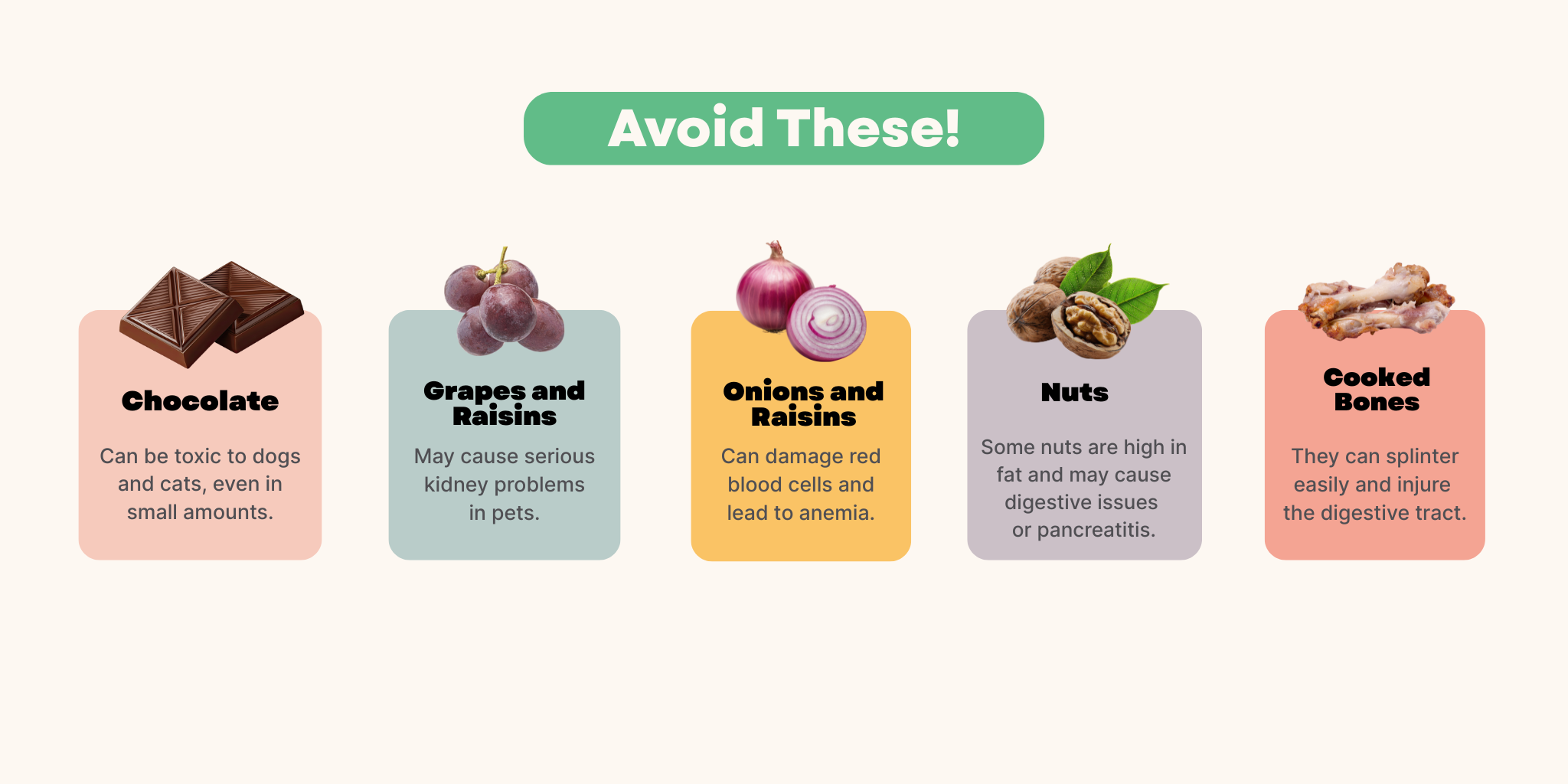
Chocolate is one of the most well-known toxic foods for dogs, although cats can also be affected. It contains substances called theobromine and caffeine, which pets cannot process properly.
Pets may experience symptoms such as:
- Vomiting
- Diarrhea
- Rapid breathing
- Increased heart rate
- Seizures in severe cases
Dark chocolate and baking chocolate are particularly dangerous due to their higher concentration levels.
2. Onions & Garlic
Onions, garlic, leeks, and chives belong to the allium family and can damage a pet’s red blood cells.
Whether cooked, raw, powdered, or dried, these ingredients may cause oxidative damage to red blood cells and potentially lead to anemia in both cats and dogs, with cats generally being more sensitive.
Signs to watch out for include:
- Weakness
- Loss of appetite
- Pale gums
- Low energy
Since onions and garlic are commonly used in many dishes, pet owners should be careful when sharing leftovers or table scraps.
3. Grapes & Raisins
Although the exact cause is still not fully understood, grapes and raisins are known to be potentially toxic to dogs, and even small amounts may cause acute kidney injury in susceptible individuals.
Symptoms may include:
- Vomiting
- Lethargy
- Loss of appetite
- Increased thirst or reduced urination
If your pet accidentally consumes grapes or raisins, immediate veterinary attention is recommended.
4. Caffeine
Caffeinated products such as coffee, tea, energy drinks, and certain sodas can overstimulate a pet’s nervous system.
Too much caffeine may cause:
- Restlessness
- Tremors
- Rapid heartbeat
- Hyperactivity
- Seizures
Pets are much more sensitive to caffeine than humans, so even small amounts should be avoided.
5. Other Foods to Be Careful With
Besides the foods above, pet owners should also be cautious with:
- Alcohol
- Avocado (especially the leaves, skin, and pit)
- Macadamia nuts
- Xylitol (commonly found in sugar-free gum, candies, peanut butter, baked goods, and some oral-care products)
- Cooked bones (which can splinter and cause choking or internal injury)
- Excessively salty or oily foods
When in doubt, it’s always safer to check before feeding human food to pets.
Tips for Safer Feeding Habits
To help keep your pets safe:
- Stick to pet-safe treats and meals
- Keep toxic foods out of reach
- Educate family members about harmful foods
- Avoid feeding pets directly from the dining table
- Contact a veterinarian immediately if accidental consumption occurs
What Should You Do If Your Pet Accidentally Eats Toxic Food?
If you suspect your pet has consumed harmful food, try to stay calm and contact a veterinarian immediately. Avoid waiting for symptoms to appear, as some toxic reactions may develop slowly.
If possible:
- Note the type of food consumed
- Estimate the amount eaten
- Monitor unusual behavior
- Bring packaging or ingredient information to the clinic
Quick action can make a significant difference in protecting your pet’s health.
Final Thoughts
Sharing food may seem like a simple way to show love, but some human foods can seriously affect your pet’s health. By understanding which foods to avoid, pet owners can make safer choices and help their furry companions live healthier, happier lives.
After all, caring for pets starts with knowing what’s best for them ❤️
Disclaimer
This article is intended for general educational purposes and should not replace professional veterinary advice. If your pet consumes a potentially toxic food, consult your veterinarian promptly.
Want more pet care tips and educational content?
Follow @reinbiotech for more helpful guides to support your pet’s health and wellbeing.