


Choosing the right food for your pet can feel overwhelming. With so many brands, ingredients, and claims on pet food packaging, it can be difficult to know what actually matters.
Words like “premium,” “natural,” “complete,” or “healthy” may catch your attention, but the ingredient list and nutritional information can tell you much more about what your pet is actually eating.
Understanding how to read a pet food label can help you make more informed choices and find nutrition that better supports your pet’s everyday health and wellbeing.
1. Start With the Ingredient List
One of the easiest places to start is the ingredient list.
Ingredients are generally listed in order by weight, with the ingredients used in the greatest amount appearing first. This means the first few ingredients can give you a useful starting point for understanding what makes up the food.
Rather than focusing only on the claims on the front of the package, take a closer look at what is actually listed on the back.
For example, look for clearly identified ingredients rather than relying on broad or vague descriptions. The more you understand about the ingredients, the easier it becomes to compare different pet foods.
2. Look for Clearly Named Protein Sources
Protein is an important part of a pet’s diet, but the source of that protein matters too.
When reading a label, look for clearly named animal protein sources such as chicken, salmon, beef, lamb, or other specifically identified meats or fish.
Clear ingredient names make it easier to understand what your pet is actually eating. This can also be especially useful when you are comparing different formulas or looking for a food that fits your pet’s individual needs.
For example, PetKind formulas focus on clearly identified animal-based ingredients, including green beef tripe and other named protein sources depending on the formula.
The goal isn’t simply to choose a food because one ingredient appears first. Instead, consider the overall ingredient list and how the different ingredients contribute to a balanced diet.
3. Don’t Automatically Avoid Whole Grains
Carbohydrates and grains are often misunderstood when choosing pet food.
Whole grains can provide carbohydrates, fibre, and other nutrients, and they are not automatically a sign of poor-quality pet food.
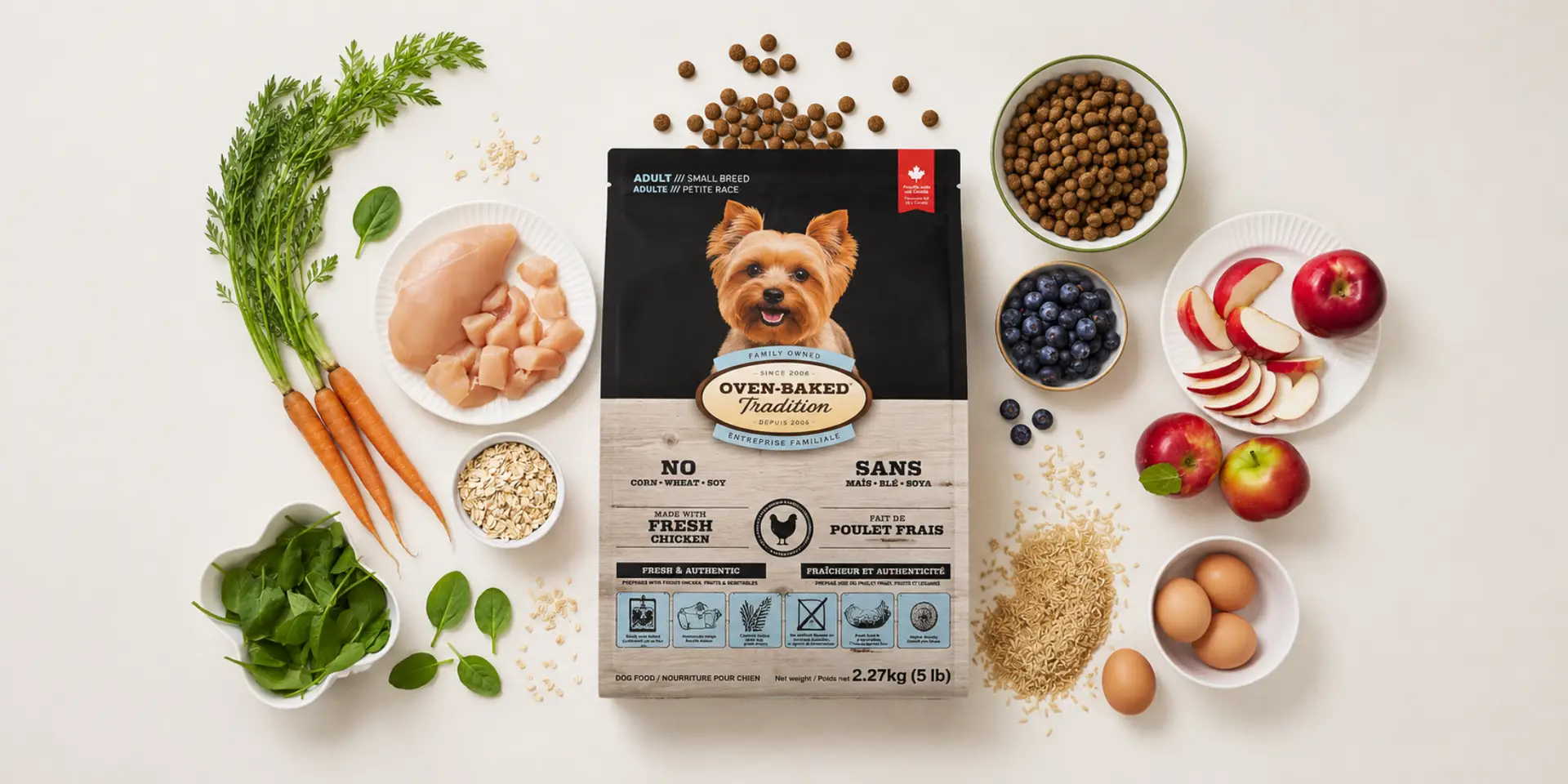
Instead of deciding that an ingredient is “good” or “bad” simply because it is a grain, look at the overall formulation. What matters is whether the food provides appropriate and balanced nutrition for your pet.
A quality diet is about the complete nutritional picture, rather than eliminating one particular ingredient without considering the reason it is included.
.
4. Look Beyond the Front-of-Pack Claims
The front of a pet food package can highlight key product features, but the back of the package provides more information to help you evaluate the food.
Claims such as “natural,” “grain-free,” or “premium” can be useful information, but they shouldn’t be the only things you consider.
Take a moment to turn the package around and review:
- The ingredient list
- The named protein sources
- Guaranteed analysis or nutritional information
- Feeding guidelines
- Whether the food is formulated for your pet’s life stage
This extra step can help you make a decision based on the food itself rather than marketing language alone.
5. Pay Attention to Additives
Additives aren’t necessarily something to fear. Some are included for practical reasons, such as preserving freshness, maintaining stability, or providing nutritional benefits.
The important thing is understanding what they are and why they are included.
When comparing foods, look at the full ingredient list rather than assuming that every unfamiliar ingredient is harmful or that every “natural” ingredient automatically makes a product better.
A thoughtful approach is to consider the overall formulation, the quality of the ingredients, and whether the food provides balanced nutrition for your pet.
6. Consider the Complete Nutritional Picture
A pet food label shouldn’t be judged by one ingredient alone.
A food may contain an excellent protein source, but that doesn’t automatically mean it is nutritionally complete. Similarly, seeing a particular grain or additive on the label doesn’t automatically make a food unsuitable.
Look at the whole formulation and consider whether it provides balanced nutrition appropriate for your pet’s:
- Age and life stage
- Size
- Activity level
- Individual nutritional needs
Comparing different formulas, such as those from Oven Baked Tradition and PetKind, can also help pet owners see how ingredient lists and nutritional information vary between products.
Choosing Pet Food With More Confidence
Reading pet food labels doesn’t have to be complicated. Start by looking at the ingredient list, understanding the main protein sources, and considering the overall nutritional picture rather than focusing on a single ingredient or marketing claim.
Final Thoughts
Your pet’s food is an important part of their everyday care, and understanding the label gives you more confidence in the choices you make.
You don’t need to be a nutrition expert or understand every ingredient at first. Start by looking a little closer, comparing different options, and considering what best suits your individual pet.
Because making informed choices starts with knowing what’s in their bowl. 🐾
Want More Pet Care Tips and Educational Content?
Follow @reinbiotech for more helpful guides, practical tips, and educational content to support your pet’s health, nutrition, and wellbeing.