

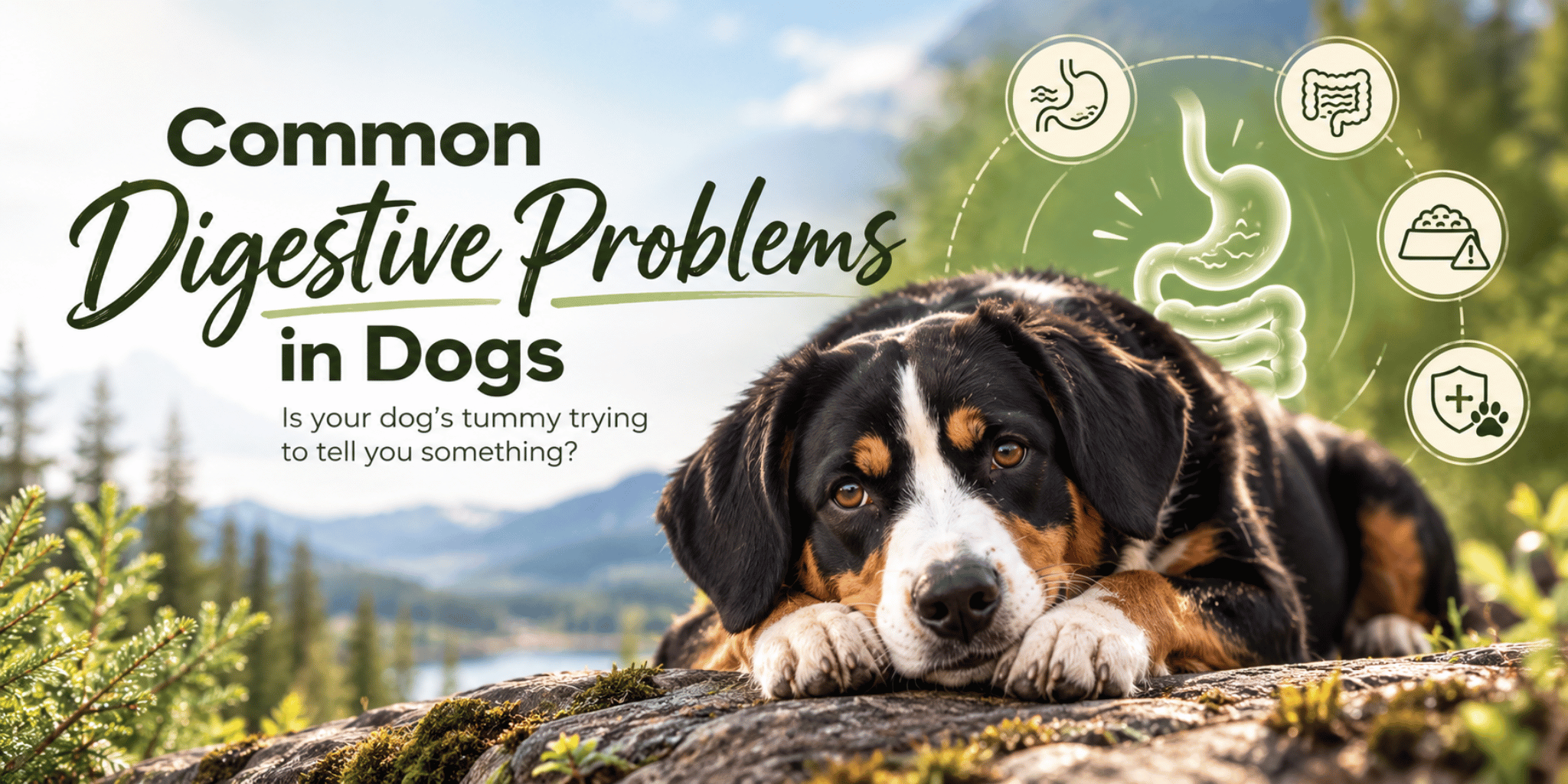
Is Your Dog’s Tummy Trying to Tell You Something?
A missed meal, a sudden change in stool, or an unexpected mess on the floor can leave any dog owner wondering what went wrong.
Digestive problems are common in dogs, and they can range from a brief episode of stomach upset to signs of a more serious health condition. Sometimes, the cause is related to something your dog ate. Other times, parasites, infections, food sensitivities, or underlying medical conditions may be responsible.
The challenge is knowing when a problem can be monitored and when your dog needs veterinary attention.
Understanding the common signs, identifying possible triggers, and building consistent feeding habits can help you make better decisions for your pet. Let’s look at the digestive issues dog owners should know about, along with practical ways to support everyday digestive health.
1. Vomiting: More Than Just an Upset Stomach
Finding vomit on the floor is never a pleasant surprise. An occasional episode can happen, but repeated vomiting should not be ignored.

What can cause vomiting in dogs?
Common triggers include:
- Eating spoiled food, rubbish, or something they should not have eaten
- Sudden changes in diet
- Food intolerance or sensitivity
- Parasites or infections
- Swallowing foreign objects
- Other underlying medical conditions
Vomiting is a symptom rather than a diagnosis, so its cause cannot always be determined from appearance alone.
What should you do?
Pay attention to how often your dog vomits, whether they can keep water down, and whether other symptoms appear. Do not give human medication or make major dietary changes without appropriate veterinary advice.
Contact a veterinarian promptly if vomiting repeats, your dog seems weak or lethargic, or their condition worsens. Repeated attempts to vomit without bringing anything up, especially with a swollen abdomen, require emergency veterinary attention.
2. Diarrhea: When Your Dog’s Stool Changes
Loose or watery stools are another common sign of digestive upset. A sudden change can be messy, but it can also cause dehydration if it continues.
Common causes of diarrhea
Possible triggers include:
- Sudden food changes
- Food intolerance or dietary sensitivity
- Eating inappropriate foods or table scraps
- Parasites or infections
- Stress or changes in routine
- Certain medications or underlying health conditions
The cause matters because different problems require different approaches. Changing food repeatedly in an attempt to find an immediate fix may make it harder to identify the original trigger.
How can you help?
Keep fresh water available and monitor your dog’s energy, appetite, and stool. Avoid giving rich treats, unfamiliar foods, or table scraps while the problem is being assessed.
Seek veterinary advice if diarrhea is persistent, severe, or accompanied by vomiting or other concerning symptoms. Multiple episodes of watery diarrhea, blood in the stool, lethargy, or loss of appetite are reasons to contact a veterinarian promptly.
3. Food Sensitivity: Is Your Dog Reacting to Something in Their Diet?
Some dogs do not tolerate certain ingredients well. Reactions may involve the digestive system, the skin, or both.
Possible signs include:
- Recurrent diarrhea or soft stools
- Vomiting
- Bloating or abdominal discomfort
- Itching or recurring skin irritation in some dogs
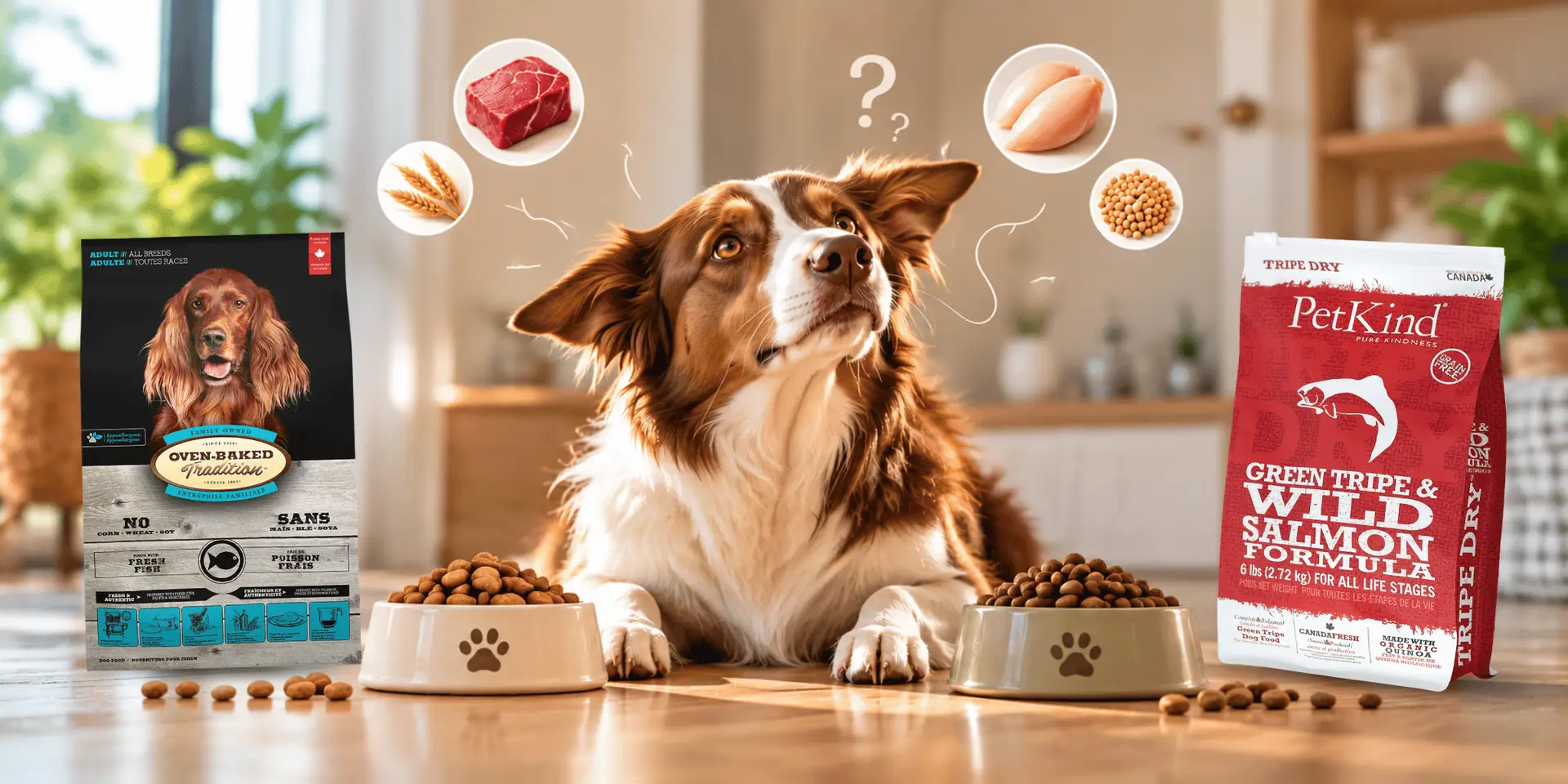
Food sensitivity is not always the same as a food allergy. Similar symptoms can also occur with parasites, infections, and other medical conditions, so it is important not to assume that a particular ingredient is responsible without proper assessment.
What can help?
Start by keeping a record of your dog’s food, treats, table scraps, symptoms, and any recent changes. This information can help your veterinarian identify patterns.
If a food allergy or intolerance is suspected, your veterinarian may recommend a controlled dietary trial. During such a trial, consistency is essential: adding other foods or treats can make the results difficult to interpret.
A food labelled for sensitive dogs may be worth discussing with your veterinarian, but no single formula is suitable for every dog.
4. Sudden Food Changes: Give Your Dog Time to Adjust
Switching food can be necessary when a dog reaches a new life stage, develops a dietary requirement, or needs a different formula. The problem is changing too quickly.
A dog’s digestive system may need time to adjust to a new food’s ingredients, nutrient profile, and texture. An abrupt change can contribute to digestive upset, including loose stools or vomiting.
How to transition to a new dog food
Unless your veterinarian recommends a different approach, introduce the new food gradually over several days.
One example of a transition schedule is:
| Days | Current Food | New Food |
| 1–3 | 75% | 25% |
| 4–7 | 50% | 50% |
| 8–12 | 25% | 75% |
| After transition | 0% | 100% |
Adjust the pace to your dog’s response and follow the manufacturer’s feeding guidance. Some dogs may need a slower transition.
Important: If your dog is already experiencing repeated vomiting or significant diarrhea, do not simply introduce a new commercial food to solve the problem. Speak to your veterinarian first.
5. Everyday Habits That Support Digestive Health
You cannot prevent every digestive problem, but a few consistent habits can reduce avoidable triggers and make changes easier to spot.
Keep meals consistent
Feed an appropriate amount of a complete and balanced diet suited to your dog’s life stage and needs. Avoid frequent, unnecessary changes between formulas.
Introduce new foods gradually
Whether you are changing the main diet, adding a new treat, or trying a different protein source, make changes thoughtfully. Follow veterinary guidance if your dog has a diagnosed sensitivity.
Limit table scraps and inappropriate foods
Human food, rubbish, spoiled leftovers, and unfamiliar treats can upset a dog’s digestive system. Some human foods are also toxic to dogs, so keep potentially dangerous foods out of reach.
Monitor appetite, energy, and stool
Notice changes in how much your dog eats, their usual energy level, and the consistency and frequency of their stool. Keeping a simple record can help you explain symptoms to your veterinarian.
Choose food based on your dog’s individual needs
Consider the ingredient list, nutritional adequacy, life stage, and any known sensitivities. A product’s popularity or a single advertised benefit does not guarantee that it is the right choice for your dog.
6. Choosing Dog Food With Digestive Health in Mind
Food is one part of digestive health, so it is worth looking beyond the front of the bag. Consider how the food is made, which ingredients it contains, and whether the formula suits your dog’s needs.
Two brands available through Rein Biotech offer different approaches to everyday dog nutrition: PetKind and Oven-Baked Tradition.
PetKind: Green Tripe-Based Nutrition
PetKind’s Tripe Dry range places green tripe at the centre of its recipes. Green tripe is the unbleached stomach lining of ruminant animals and is valued as an animal-based ingredient.
Some PetKind Tripe Dry formulas also list probiotic fermentation products among their ingredients. The specific recipe and ingredient list vary by formula, so it is important to check the product details before choosing a variety.
For dog owners exploring different protein sources or green-tripe-based food, PetKind may be an option to discuss with their veterinarian. However, it should not be considered a treatment for vomiting, diarrhea, or a diagnosed digestive condition.
Explore: PetKind Tripe Dry through Rein Biotech – https://www.reinbiotech.com/petkind/
Oven-Baked Tradition: A Different Approach to Kibble
Not all kibble is made in the same way. Oven-Baked Tradition uses a slow oven-baking process, which the brand says helps preserve ingredient quality, flavour, and nutrients.
Its recipes feature meat as the first ingredient, and the range includes different formulas for different life stages and dietary needs. Selected recipes are designed for dogs with food sensitivities, including specific hypoallergenic options.
For owners who want to explore an alternative to conventionally extruded kibble, Oven-Baked Tradition offers another approach to everyday feeding. As with any food, suitability depends on the individual dog and the exact formula.
Explore: Oven-Baked Tradition dog food through Rein Biotech – https://www.reinbiotech.com/oven-baked-tradition/
Bosch: German-Made Pet Food With a Focus on Nutrition
Bosch is a German pet food brand whose brand materials highlight its family-business heritage dating back to 1960, balanced recipes, and a focus on pet nutrition. Its promotional materials also highlight formulations described as being made without additives and a commitment to avoiding animal testing. These claims should be checked against the specific product range and current manufacturer information.
When considering Bosch, review the ingredients, nutritional adequacy, and feeding guidance for the particular formula. As with other dog foods, the right choice depends on your dog’s life stage, health, and individual dietary requirements.
Although nutrition plays an important role in overall wellbeing, no dog food should be relied upon to prevent or reverse a medical condition on its own. If your dog has persistent digestive symptoms or a suspected food allergy, consult your veterinarian before changing its diet.
Explore: Bosch pet food through Rein Biotech – https://www.reinbiotech.com/bosch/
Which option is right for your dog?
There is no single best food for every dog. Compare the full ingredient list, nutritional information, and intended use of each formula rather than relying on a brand name or a single advertised benefit.
PetKind offers green-tripe-based Tripe Dry formulas, Oven-Baked Tradition provides slow oven-baked recipes and selected options for dogs with food sensitivities, while Bosch highlights its German heritage and nutritional approach.
If your dog experiences recurring vomiting, diarrhea, or suspected food allergies, speak with your veterinarian before selecting a new diet. Even a well-formulated food cannot address every possible cause of digestive upset.
7. When Should You Call the Vet?
Knowing when to seek help is just as important as knowing how to prevent common problems.
Contact a veterinarian promptly if your dog has:
- Repeated vomiting
- Multiple episodes of watery diarrhea
- Blood in the stool or vomit
- Lethargy or unusual weakness
- Loss of appetite alongside other symptoms
- Symptoms that persist or become worse
Seek emergency veterinary care if your dog has a swollen abdomen with repeated unproductive retching, collapses, appears severely distressed, or may have swallowed a toxin or foreign object.
Puppies, senior dogs, and dogs with existing health conditions may need earlier assessment because they can be more vulnerable to complications.
Do not wait for a food change to work when your dog has warning signs. A veterinarian can assess the cause and recommend the appropriate treatment or dietary plan.
Final Thoughts: A Happier Tummy Starts With the Right Care
Digestive problems can be frustrating for both dogs and their owners, but recognising the signs early can help you make better decisions.
From monitoring vomiting and diarrhea to managing food sensitivities and introducing new diets gradually, consistent feeding habits can help you identify potential triggers and support your dog’s everyday wellbeing.
Choosing a suitable complete and balanced food is another important part of the picture. PetKind offers green-tripe-based formulas, Oven-Baked Tradition provides slow oven-baked recipes and selected options for dogs with food sensitivities, while Bosch brings its German pet food heritage and nutritional approach to the range of choices available.
Ultimately, the best food depends on your dog’s individual needs. If digestive symptoms persist or worsen, seek veterinary advice rather than relying on a diet change alone.
References for Content Validation
The following sources were used to validate the article’s information on common digestive problems in dogs, feeding practices, and the featured pet food brands.
- Merck Veterinary Manual: Vomiting in Dogs
Veterinary reference on common causes of vomiting in dogs, related symptoms, and when veterinary assessment may be necessary. - Merck Veterinary Manual: Introduction to Digestive Disorders of Dogs
Reference for common signs of digestive disorders, including vomiting, diarrhea, abdominal discomfort, appetite loss, and dehydration. - PetKind Official Website: Frequently Asked Questions
Official information about green tripe, Tripe Dry formulas, ingredients, nutritional completeness, and considerations for dogs with food sensitivities. - PetKind Official Website: Tripe Dry Product Information
Product information about PetKind Tripe Dry, including its use of green tripe and fresh meat as key ingredients. - Oven-Baked Tradition: The Difference
Official information about the brand’s slow oven-baking process, ingredients, and the brand’s stated nutritional and digestibility benefits. - Oven-Baked Tradition: Frequently Asked Questions
Official feeding guidance, including the recommended gradual transition schedule for dogs and cats.
Editorial Notes
- Veterinary accuracy: Digestive symptoms can have multiple causes. The article does not present any specific dog food as a treatment for vomiting, diarrhea, food allergies, or other medical conditions.
- Product claims: Claims about nutrient retention, digestibility, and other nutritional benefits should be supported by verifiable evidence before publication. Avoid stating that Oven-Baked Tradition retains “almost 100% of original vitamins and minerals” unless the brand can provide substantiation.
- Brand representation: PetKind and Oven-Baked Tradition are presented as food options, not guaranteed solutions for digestive problems. Ingredients and suitability may vary by formula and individual dog.
- Veterinary guidance: The article recommends veterinary assessment for persistent, severe, or concerning symptoms. A change in diet should not replace veterinary care when a dog is unwell.
- Food-transition guidance: The suggested transition schedule is a general example based on Oven-Baked Tradition’s published guidance. The pace may need to be adjusted according to the dog’s tolerance and the manufacturer’s instructions.
- Publication check: Verify product names, ingredients, feeding recommendations, and brand-specific claims against the latest official product information before publication.
Want More Pet Care Tips and Educational Content?
Follow @reinbiotech for more helpful guides, practical tips, and educational content to support your pet’s health, nutrition, and wellbeing.