

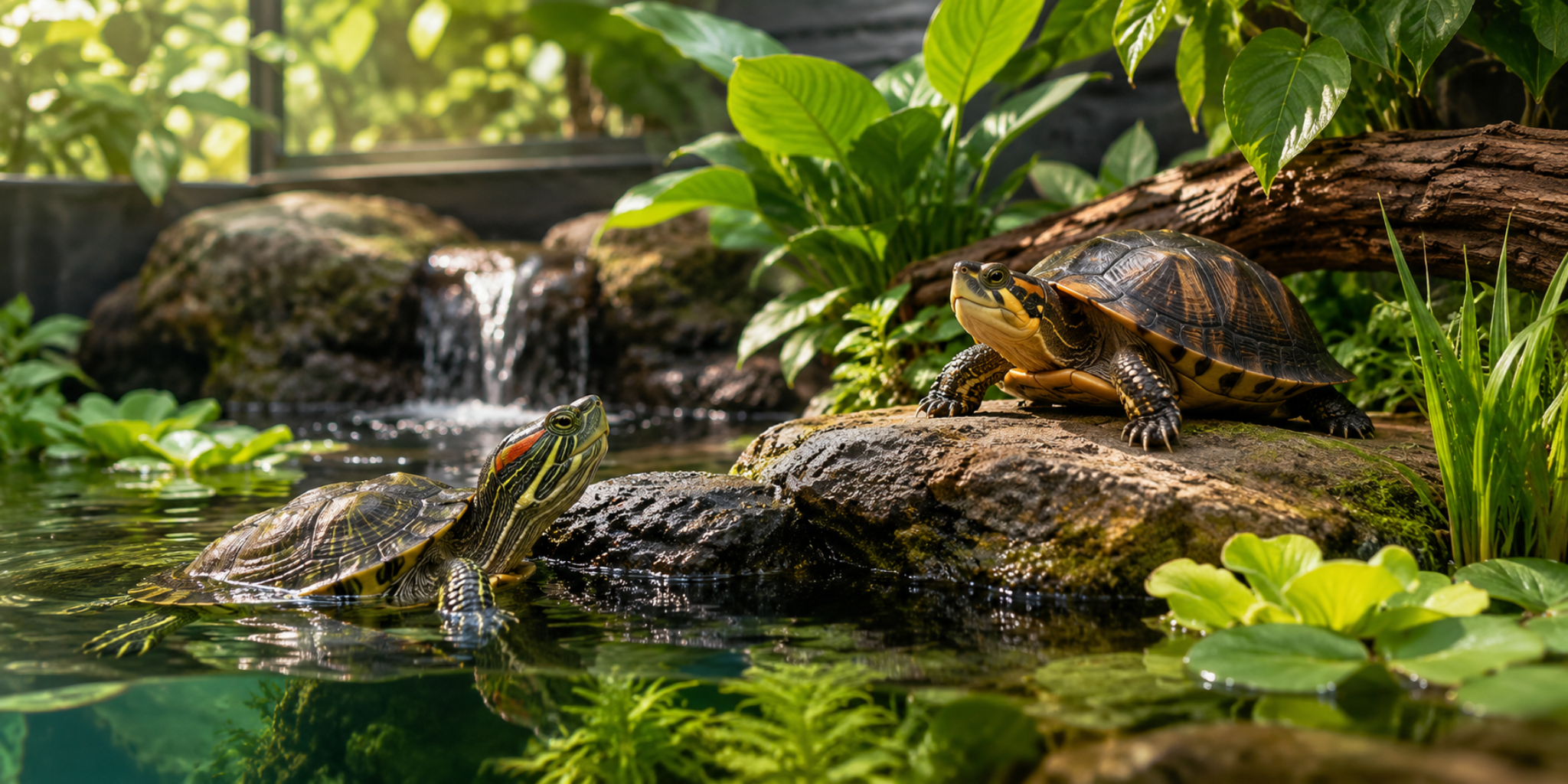
Setting up your first turtle habitat can feel overwhelming, especially when there are several things to consider. From choosing the right enclosure to providing suitable lighting, temperature, water and food, each part of the habitat plays an important role in your turtle’s everyday comfort and wellbeing.
Red-Eared Sliders and Malayan Box Turtles have different habitat needs, so understanding the basics of each species can help you create a suitable environment from day one.
You don’t need to make the setup unnecessarily complicated. Start with the essentials, understand what your turtle needs, and build good care habits from the beginning.
Here are five important things to consider when creating the right habitat from day one.
1. Start With the Right Space
Choosing the right enclosure is one of the first steps in creating a suitable habitat for your turtle.
Red-Eared Sliders are primarily aquatic and need plenty of swimming space, together with a completely dry area where they can climb out of the water and bask.
Malayan Box Turtles are semi-aquatic and need a habitat that provides both shallow water and suitable terrestrial areas for resting, exploring and hiding.
When choosing an enclosure, consider your turtle’s size and lifestyle, and make sure there is enough space for comfortable movement as it grows. The setup should also allow easy access for cleaning, feeding and regular maintenance.
2. Create a Natural Home
Once you have the right enclosure, the next step is creating an environment where your turtle can feel comfortable and secure.
The habitat should provide appropriate areas for swimming, resting, basking and hiding, depending on the species.
- Choose the Right Substrate
For Red-Eared Sliders, a bare-bottom aquatic area can be a practical option and may make cleaning easier.
If substrate is used, avoid small gravel, sand or other materials that could be swallowed.
For Malayan Box Turtles, a suitable terrestrial substrate can help create a more natural land area. Make sure the substrate and decorations are safe and cannot be easily ingested.
- Add Plants and Décor
Plants, rocks and other décor can help create a more natural-looking environment. However, decorations should be securely positioned and should not create areas where your turtle could become trapped.
- Provide Resting and Hiding Areas
Both turtles benefit from having secure areas where they can rest or retreat. Balance open areas with suitable hiding and resting spaces to create a habitat that is comfortable without becoming overcrowded.
3. Get Lighting, Heat & Water Conditions Right
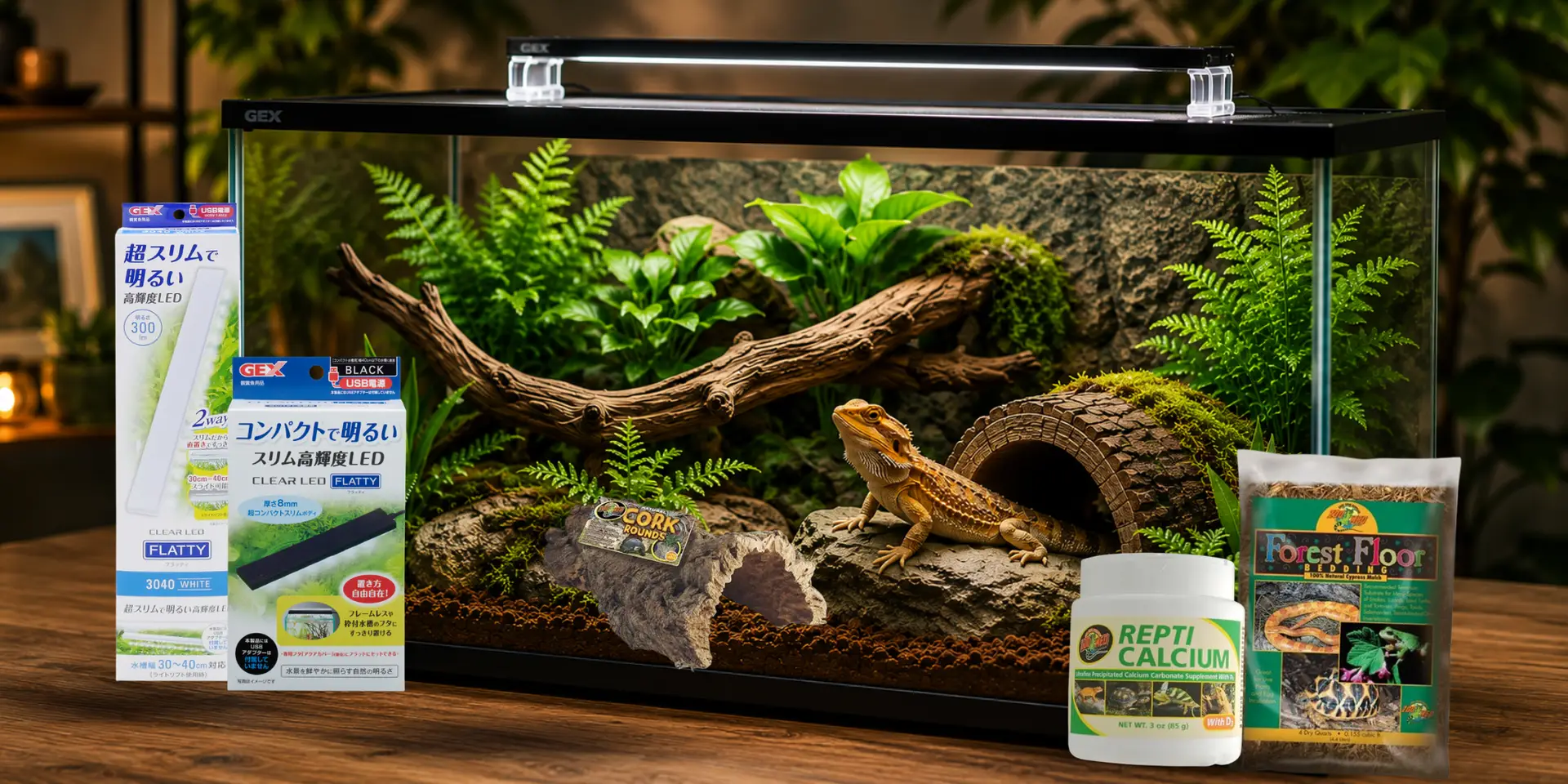
Lighting, temperature, and water conditions are important parts of creating a suitable habitat for a Red-Eared Slider or Malayan Box Turtle. The environmental requirements can vary depending on the species and setup, so it is important to understand the specific needs of your turtle.
- Lighting
Appropriate lighting is an important part of a turtle habitat. UVB lighting supports vitamin D3 production and calcium metabolism, making appropriate UVB exposure an important consideration for turtle care.
Zoo Med offers reptile lighting options, including UVB products designed for reptile habitats. Choose a suitable UVB setup for your turtle and follow the manufacturer’s guidance for lamp type, placement and exposure.
For turtle habitats, Zoo Med offers reptile lighting options, including UVB products designed for reptile habitats. Standard aquarium LED lighting, such as GEX aquarium lighting, provides illumination but should not be used as a replacement for an appropriate UVB source.
- Heat & Basking
Temperature is another important part of the habitat. Red-Eared Sliders need a suitable water temperature as well as a dry basking area with an appropriate heat source.
Malayan Box Turtles also need suitable warmth within their habitat, together with access to appropriate terrestrial and resting areas.
Use reliable thermometers to regularly check the temperature of the water and habitat, and adjust the setup when necessary.
- Water Conditions
Clean, appropriately maintained water is especially important for Red-Eared Sliders, which spend much of their time in the water. A suitable filtration system can help maintain water quality, but regular water changes and cleaning are still necessary.
Malayan Box Turtles also require access to clean, suitable water within their semi-aquatic habitat.
Monitor water temperature and cleanliness regularly, and remove waste and uneaten food as part of your routine care.
.
4. Keep Food and Water Part of the Routine
A comfortable habitat also needs to support your turtle’s everyday feeding and hydration needs.
Red-Eared Sliders are omnivorous, with their dietary needs changing as they grow. Young turtles generally require more animal-based food, while adults tend to consume a more varied diet.
Malayan Box Turtles are also omnivorous, with a diet that is generally more plant-focused.
Choose food appropriate for your turtle’s species, age and nutritional needs. Commercial turtle foods from brands such as Zoo Med, Tetra and GEX can be incorporated as part of an appropriate feeding routine.
Provide clean water appropriate to your turtle’s habitat, and keep food and water areas clean.
Keeping feeding and cleaning routines consistent can make daily turtle care easier to manage.
5. Build Good Habits From Day One
Good turtle care is built around simple, consistent habits.
Regularly clean the habitat, remove waste and uneaten food, provide fresh water, check temperature and lighting equipment, and make sure basking and resting areas remain safe and accessible.
Take time to observe your turtle’s behaviour, appetite and activity. Changes in normal behaviour can be useful signs that something in the habitat or routine may need attention.
You do not need to constantly rearrange the habitat. A clean, stable and appropriately maintained environment is often easier for both you and your turtle to manage.
After handling your turtle or cleaning its habitat, wash your hands thoroughly with soap and water to maintain good hygiene.
Choosing the Right Habitat for Your Turtle
The right habitat will look different for each turtle.
Red-Eared Slider
- Plenty of swimming space
- Completely dry basking area
- Appropriate heat source
- Suitable UVB lighting
- Clean, appropriately heated water
- Safe and easy-to-maintain enclosure
Malayan Box Turtle
- Semi-aquatic habitat with both land and shallow water areas
- Suitable terrestrial substrate
- Humid environment
- Appropriate heat and UVB
- Secure hiding and resting areas
- Clean water and safe enclosure design
Starting with these fundamentals can help create a habitat that is comfortable, practical and easier to maintain.
Additional Note for Singapore Pet Owners
Red-Eared Sliders (Trachemys scripta elegans) and Malayan Box Turtles (Cuora amboinensis) are approved wildlife species that may be kept as pets in Singapore, subject to applicable requirements.
If you are planning to acquire or import a turtle, please check the latest requirements and regulations with Singapore’s Animal & Veterinary Service (AVS).
Why the Right Habitat Matters
A suitable habitat gives your turtle enough space to move, rest and behave naturally while providing the environmental conditions it needs.
For Red-Eared Sliders, this means providing adequate swimming space, a dry basking area, suitable heat and UVB, and clean water.
For Malayan Box Turtles, the habitat should provide an appropriate balance of terrestrial and aquatic areas, suitable humidity, warmth, UVB and secure resting spaces.
Regularly checking the enclosure, equipment, water quality and cleanliness can help you maintain a healthy and comfortable environment.
Final Thoughts
Creating the right habitat for your turtle does not have to be complicated. Start with the fundamentals: the right space, safe habitat design, appropriate lighting and heat, suitable water conditions, proper nutrition and consistent daily care.
Red-Eared Sliders and Malayan Box Turtles have different habitat requirements, so take the time to understand your turtle’s specific needs and adjust the setup as it grows.
A good habitat is not necessarily the most complicated one. It is one that provides the right conditions, remains clean and safe, and supports your turtle’s everyday wellbeing.
Want to Give Your Turtle the Best Start? 🐢
Follow @reinbiotech for more practical pet care tips and helpful advice on creating a safe, comfortable environment for your pets.